
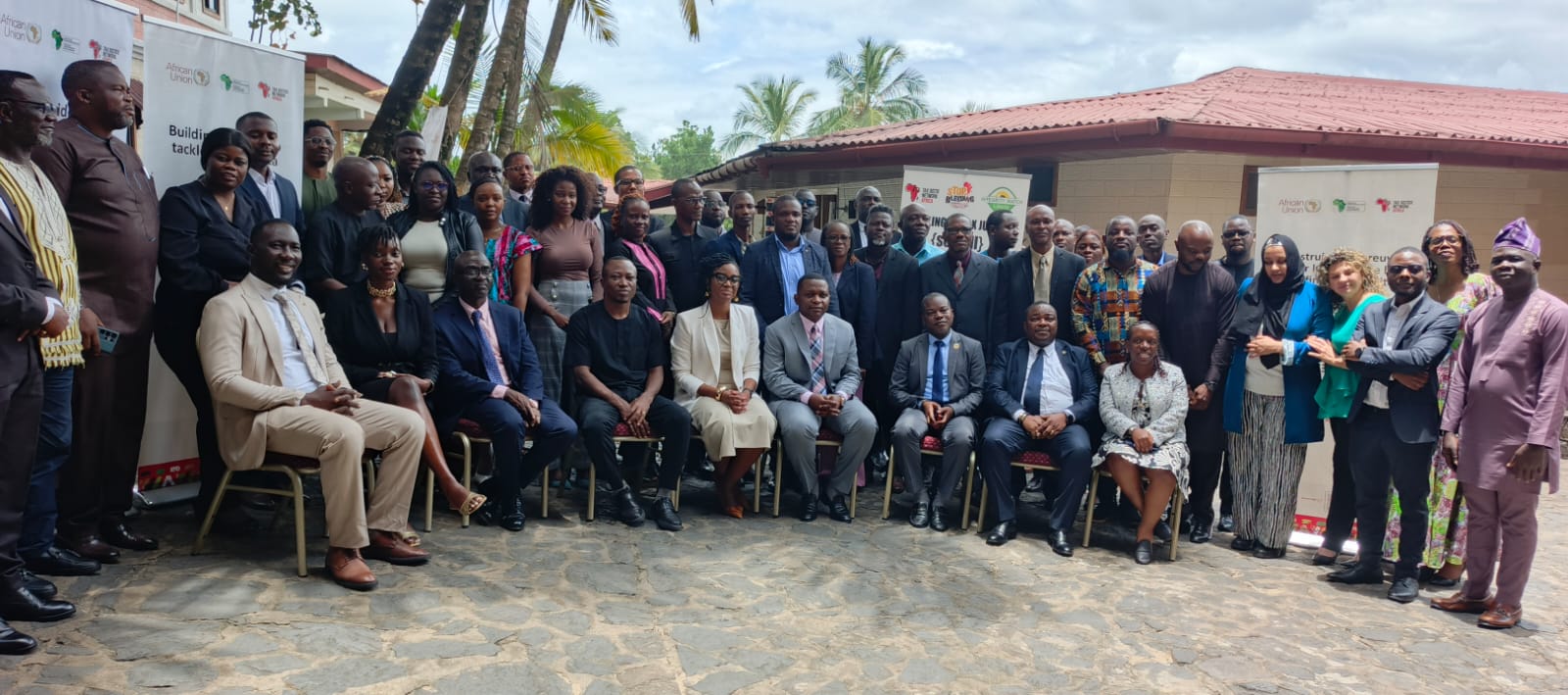
A renowned international integrity group, Tax Justice Network Africa (TJNA), has commenced its fifth Anti- Illicit Financial Flows (IFFs) Policy Tracker piloting workshop at Cape Hotel in Monrovia, Liberia.
The three-day gathering which runs from September 1-3, 2025, is organized by TJNA in collaboration with the African Union – Economic Development, Trade, Tourism Industry, and Minerals Department (AU-ETTIM) and the African Tax Administration Forum (ATAF).
The workshop, which brings together policymakers and technical experts, is aimed at assessing Liberia’s progress and challenges in combating illicit financial flows (IFFs). Competent authorities and regulatory agencies attending the workshop include the Financial Intelligence Agency of Liberia (FIA), Liberia Revenue Authority (LRA), Public Procurement and Concession Commission (PPCC), Liberia Business Registry (LBR), and the Central Bank of Liberia (CBL). Others are the Ministry of Finance and Development Planning, the General Auditing Commission (GAC), the Liberia Anti-Corruption Commission (LACC), Ministry of Justice, and the Integrity Watch. Their engagement will ensure a holistic assessment that reflects the country’s governance, financial, and regulatory landscape.
Meanwhile, the Anti-IFFs Policy Tracker is a self-assessment tool developed to help African governments evaluate national responses to IFFs. It focuses on four key thematic areas – including policy and legislative frameworks, institutional frameworks, information and data frameworks, and interagency cooperation.
The Policy Tracker is a tool designed to monitor the implementation of policies to curb illicit financial flows (IFFs) out of African countries. It tracks a country’s year-on-year progress in implementing policies to minimize Illicit Financial Flows at the national level.
To achieve these objectives, the Anti-IFFs Policy Tracker targets various government institutions involved in works that have direct implications for Illicit Financial Flows. This ongoing pilot phase aims to identify high-risk areas in the financial system, produce recommendations for policy and institutional reforms, and to strengthen cooperation and understanding among national and regional stakeholders on anti-IFFs strategies.
This current pilot phase in Liberia builds on successful pilot exercises already completed in Namibia, Uganda, Ghana, and Côte d’Ivoire. Liberia now joins this process as part of a broader effort to strengthen national responses to IFFs and promote evidence-based reforms. It is also an enhancement of ongoing work in Liberia to strengthen governance and mitigate IFFs. Recently, through the African Parliamentary Network on Illicit Financial Flows and Taxation (APNIFFT), TJNA supported training for Liberian Lawmakers, who are currently reviewing concession agreements with ArcelorMittal and Firestone. These agreements, which granted exclusive rights to some railway lines, are under scrutiny to ensure fairer terms and stronger accountability.
TJNA’s approach is tailored to provide an objective, standardized, and data-driven assessment, enabling participants to identify policy gaps, track progress, and understand effective reforms.
The Anti-IFFs Policy Tracker marks an important advancement in addressing IFFs in Africa. The findings and recommendations will contribute to a broader strategic framework for combating IFFs on the continent, with results expected to inform Africa-wide discussions at the upcoming AU STC meeting in October 2025.
In line with its mission, TJNA expresses commitment to combat IFFs and foster financial transparency – with outcomes of this workshop expected to shape effective strategies that will pave the way for a stronger, more resilient economic future for Liberia and the wider African continent.