
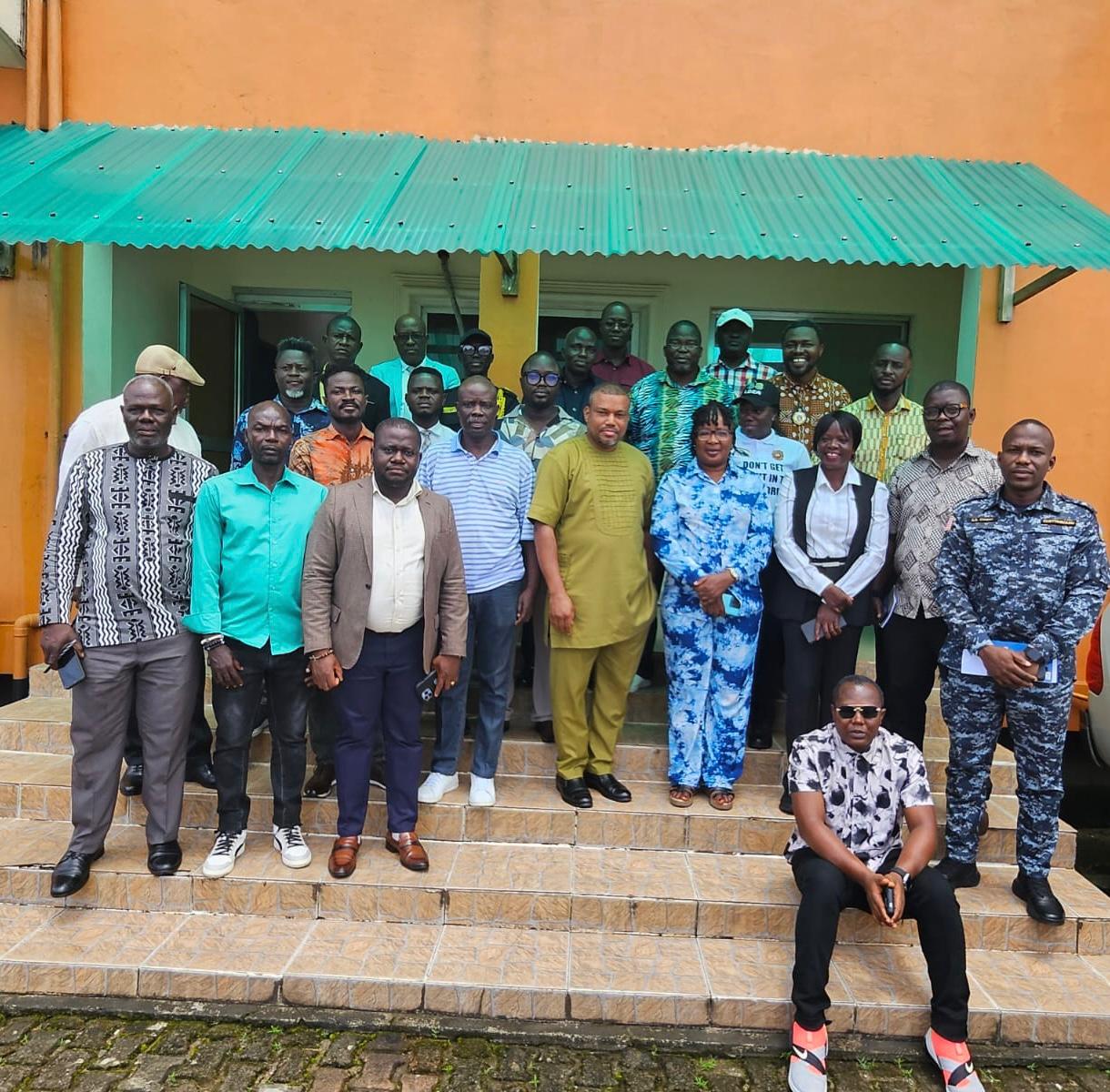
Liberia’s Financial Crime Working Group (FCWG) has formally pledged to prioritize interagency collaboration, coordination, and cooperation as critical pillars for the country’s competent authorities to jointly prevent and combat financial crimes like Money Laundering and Terrorist Financing (ML/TF).
The commitment was made during an interactive engagement training workshop organized at the Financial Intelligence Agency (FIA) Headquarters on Wednesday, October 1, 2025. The workshop which aims to sharpen the investigative skills of representatives from key stakeholder institutions, including law enforcement, prosecutorial, regulatory, and tax authorities tasked with protecting Liberia’s financial system from waste and abuse was convened by the FIA on October 1, 2025, at the FIA headquarters in Congo Town.
Representatives at the FCWG gathering included: Liberia National Police, Liberia Immigration Service, Liberia Drug Enforcement Agency, National Security Agency, Liberia Business Registry, Liberia Revenue Authority, Financial Intelligence Agency of Liberia, Ministry of Labor, Ministry of Commerce, Liberia Anti-Corruption Commission, Ministry of Transport, among other institutions.
Speaking at the daylong training, FIA Officer-In-Charge, Mohammed Ali Nasser, emphasized that Liberia has faced persistent challenges with financial crimes, which have significantly impacted its economic development and governance system.
He stated that the FCWG was established to augment the country’s combative effort in collaboratively responding to financial crimes, including money laundering, terrorist financing, fraud, corruption, and other illegal financial activities that are detrimental to Liberia’s financial reputation.
Nasser renewed his call for competent authorities within the FCWG to join forces in fighting the 21 predicate offences related to money laundering, such as corruption, bribery, drug trafficking, fraud, human trafficking, tax evasion amongst others, which continuously benefit shell companies and launderers.
Nasser detailed concrete deficiencies that need mitigating measures to legally win the fight against financial crimes, including weak enforcement of laws and limited resources for investigative bodies, political interference and lack of transparency, and public mistrust and fear of retaliation against whistleblowers.
He stated that the workshop aimed to align with FCWG’s strategic priorities in strengthening cross-team collaboration and identifying practical measures to enhance financial crime risk management.
“The key goal of FCWG is to prioritize cross-team collaboration, which enables technicians from different sectors who have different areas of expertise to work together for a common goal, and sharing of critical data and resources to achieve a better outcome,” Nasser stressed. “This solution-driven approach will allow us to leverage diverse skill sets and perspectives, leading to more innovative problem-solving and efficient execution against financial crimes.”
He explained that the FCWG’s objectives focus on several critical issues: fostering collaboration between members and other key stakeholders, identifying key challenges, gaps, and opportunities for improvement, developing a roadmap of initiatives and priorities for the upcoming period and encouraging knowledge-sharing and best practices across different sectors or jurisdictions.
To tackle the nation’s growing financial crime threats, the workshop brought together more than 30 seasoned technocrats from various backgrounds who provided their own meaningful feedback and contributions (countermeasures) during the general discussion for the benefit of the group. These technocrats proffered solutions for the greater challenges that the country faces in relation to financial crimes.