
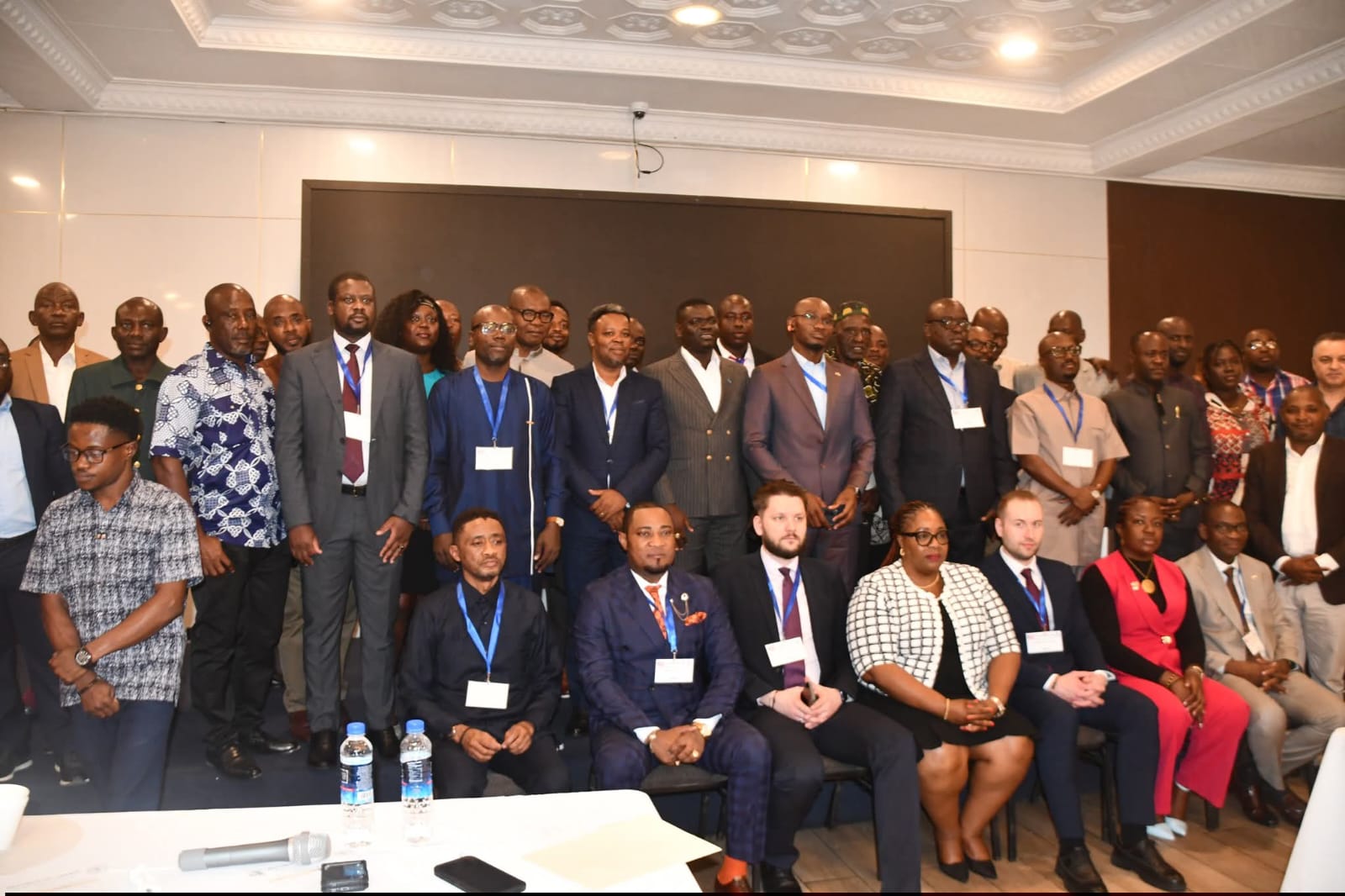
The Financial Intelligence Agency of Liberia (FIA) and mining stakeholders have reaffirmed their commitment to combating illicit financial flows linked to the diamond trade, as international reviewers recently arrived in Monrovia to scrutinize the country’s adherence to global conflict-free diamond standards.
The FIA, the Ministry of Mines and Energy, and a coalition of key institutions—including the Central Bank of Liberia, the Liberia Extractive Industries Transparency Initiative (LEITI), and the Ministry of Finance and Development Planning—have pledged to strengthen inter-agency collaboration aimed at curbing illegal activities associated with diamond mining, export, and import operations.
The renewed commitment comes as a delegation from the Kimberley Process (KP) Secretariat conducts a comprehensive review of Liberia’s diamond trade mechanisms. The Kimberley Process is the international certification scheme established to prevent “conflict diamonds” from entering global markets. The review team, comprising representatives from Sierra Leone, Russia, and Congo, is currently in Monrovia to assess the roles and responsibilities of Liberian stakeholders in minimizing diamond purchases that could finance violence or human rights abuses.
The Kimberley Process reviewers are gathering statistical data to ensure that Liberia’s diamond trade remains legitimate and that profits contribute to economic development rather than funding armed conflict. A key focus of the assessment is whether Liberian authorities maintain records on diamond dealers blacklisted by local and international bodies for alleged links to illicit diamond activities.
Countries ascribed to the Kimberley Process diamond sector are subject to a technical review every three years under Kimberley Process rules. However, Liberia’s last review was carried out in 2013. This week’s exercise brings together stakeholders across government, industry, and civil society to demonstrate compliance with the certification scheme.
The FIA team, headed by Hon. Amos Y. Boakai, Deputy Director General of the FIA, provided their expert position on key issues as they relate to the role of the FIA and the Ministry of Mines and Energy. A notable collaborative gain between the two institutions is the ongoing Country Risk Assessment in the mining field, which is sponsored by GIZ. Upon the completion of the risk assessment, the two institutions shall put together a regulation to be validated by all stakeholders and approved by the President for the proper monitoring and supervision of the sector, especially as it relates to Anti-Money Laundering and Countering the Financing of Terrorism (AML/CFT) control measures. The team indicated that when this is achieved, it will enable the country to implement the Financial Action Task Force (FATF) standard in applying the measures of Know Your Customer (KYC) and Customer Due Diligence (CDD), and to identify the beneficial owners of those involved in the sector. The FIA team called for more sharing of information between the two institutions, as it will enable them to carry out their intelligence analysis and reporting functions as required by law, to safeguard the country from all forms of financial crimes.
During the opening session of the review, which was held at Bella Casa Hotel on Monday, March 23, 2026, the Deputy Minister for Administration, Madam Eudora Blay Pritchard, lauded the visiting team for their continued support to Liberia. She noted that Liberia has now graduated from the use of paper-based certification processes to a fully automated system to enforce Kimberley Process requirements, facilitating registration, financial transparency, and other critical services.
The Kimberley Process Certification Scheme mandates that every shipment of rough diamonds intended for export carry a forgery-resistant certificate confirming the stones are conflict-free. Participating countries are prohibited from trading with non-members and must enact domestic legislation to monitor diamond shipments while sharing accurate statistical data on production and trade.
Currently, the Kimberley Process has 60 participants representing 86 countries, including the European Union as a single member. Affiliating groups such as the World Diamond Council and civil society organizations participate in monitoring and implementation.
The Kimberley Process was first discussed in May 2000 in Kimberley, South Africa, following reports that diamonds were fuelling wars in Angola, Sierra Leone, and the Democratic Republic of Congo. The certification scheme was formally signed in Interlaken, Switzerland, in November 2002 and entered into force in January 2003. A permanent secretariat was inaugurated in Gaborone in 2024.